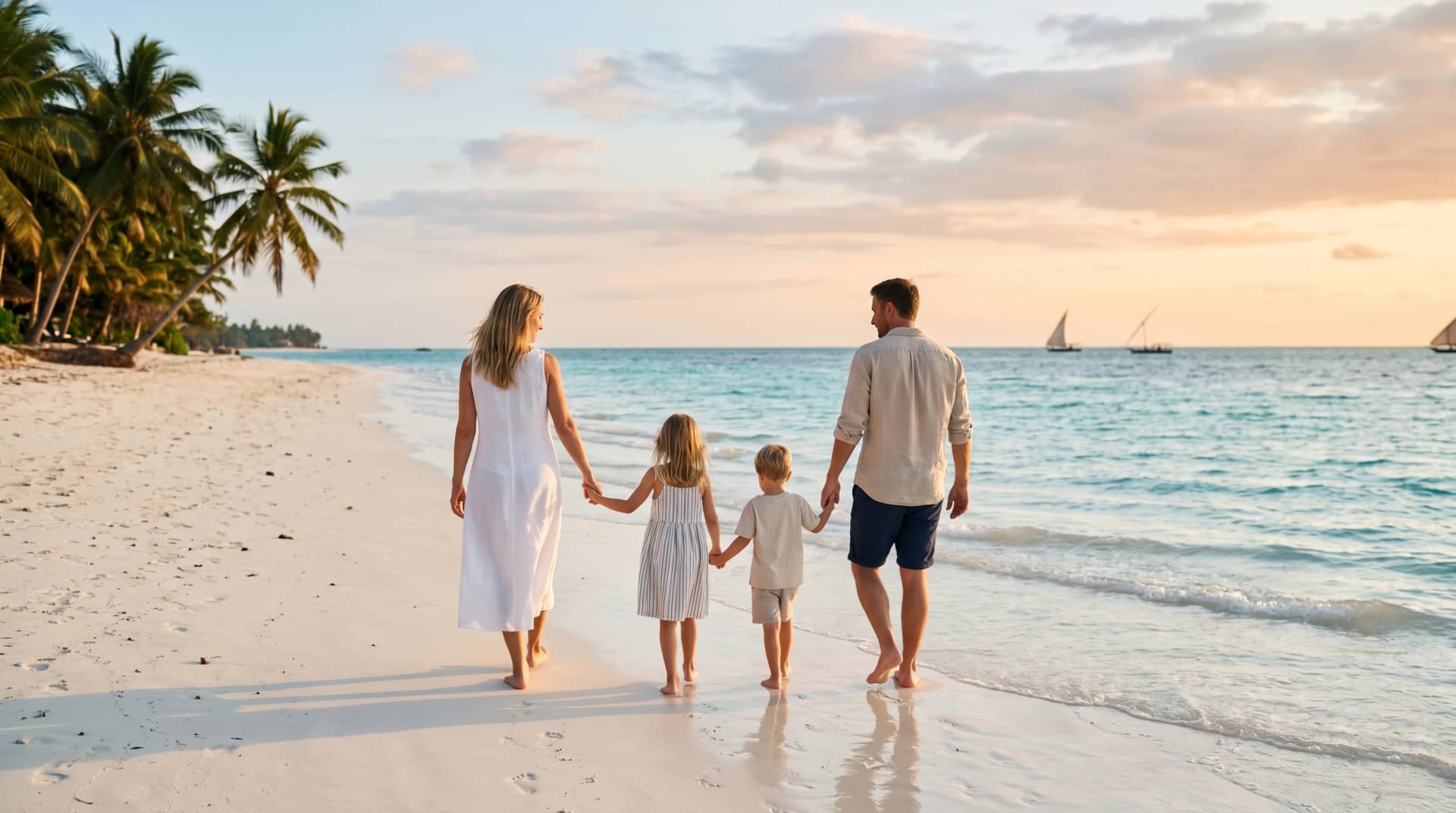
Family Holidays in Zanzibar: A Local's Guide for Parents
Most family travel advice for Zanzibar treats the island as a beach with a hotel attached. We have taken a lot of families out over the years (toddlers, teenagers, grandparents, the lot), and this guide is what we would actually tell our friends if they were bringing their kids.
Zanzibar deserves more than the standard "white sand, blue water" pitch, and for families that matters even more. Children get bored of a single beach faster than anyone. Below: when to come, where to base yourselves, what to actually book, and the practical things nobody tells you before you arrive with kids in tow.
Why Zanzibar Works for Families
Plenty of beach destinations give you sand and not much else. With kids, that runs out fast. By day three someone is asking what else there is to do.
Zanzibar is bigger than that. You get great beaches, but you also get a coral reef shallow enough for first-time snorkelers, working spice farms that turn into a sensory playground, a forest full of monkeys, a UNESCO old town with a street-food market kids love, and the option to add a real safari before or after. That mix is what makes it work for a family. It lets you alternate easy pool-and-beach days with one big adventure, so nobody gets restless and nobody gets worn out.
It also helps that Zanzibar is genuinely warm toward children. Family is central to life here, and kids are welcomed everywhere: in restaurants, in villages, on the boats. You will rarely feel like you are imposing by traveling with little ones.
When to Visit with Kids
There are two dry seasons, and both work for a family trip. For most families, school holidays decide the timing anyway, so the real question is what each window is actually like.
June to October is the cooler, drier season. Daytime sits around 26 to 28°C, humidity is low, and evenings are pleasant. This overlaps the European summer holidays, so July and August are the busiest months on the northern beaches and the easiest time to travel if your kids are in school. Comfortable weather, lively atmosphere, everything open.
December to February is the hotter dry season. Days run 30 to 32°C and the ocean is warm enough for kids to stay in for hours. Christmas and New Year are expensive and crowded, but if you can travel in mid-January through February you get hot, calm, quiet days. Just be sensible with the midday sun: hats, shade, and a break out of the heat after lunch for younger children.
Avoid the long rains from late March through May. Many small hotels and operators close, and you will lose whole days to heavy rain, which is miserable with kids. The short rains in November are usually fine, just brief afternoon bursts that clear by evening.
If your dates are flexible, our pick for an easy family trip is late June through September. For a fuller breakdown of the seasons, see our guide on when to visit Zanzibar.
Where to Stay
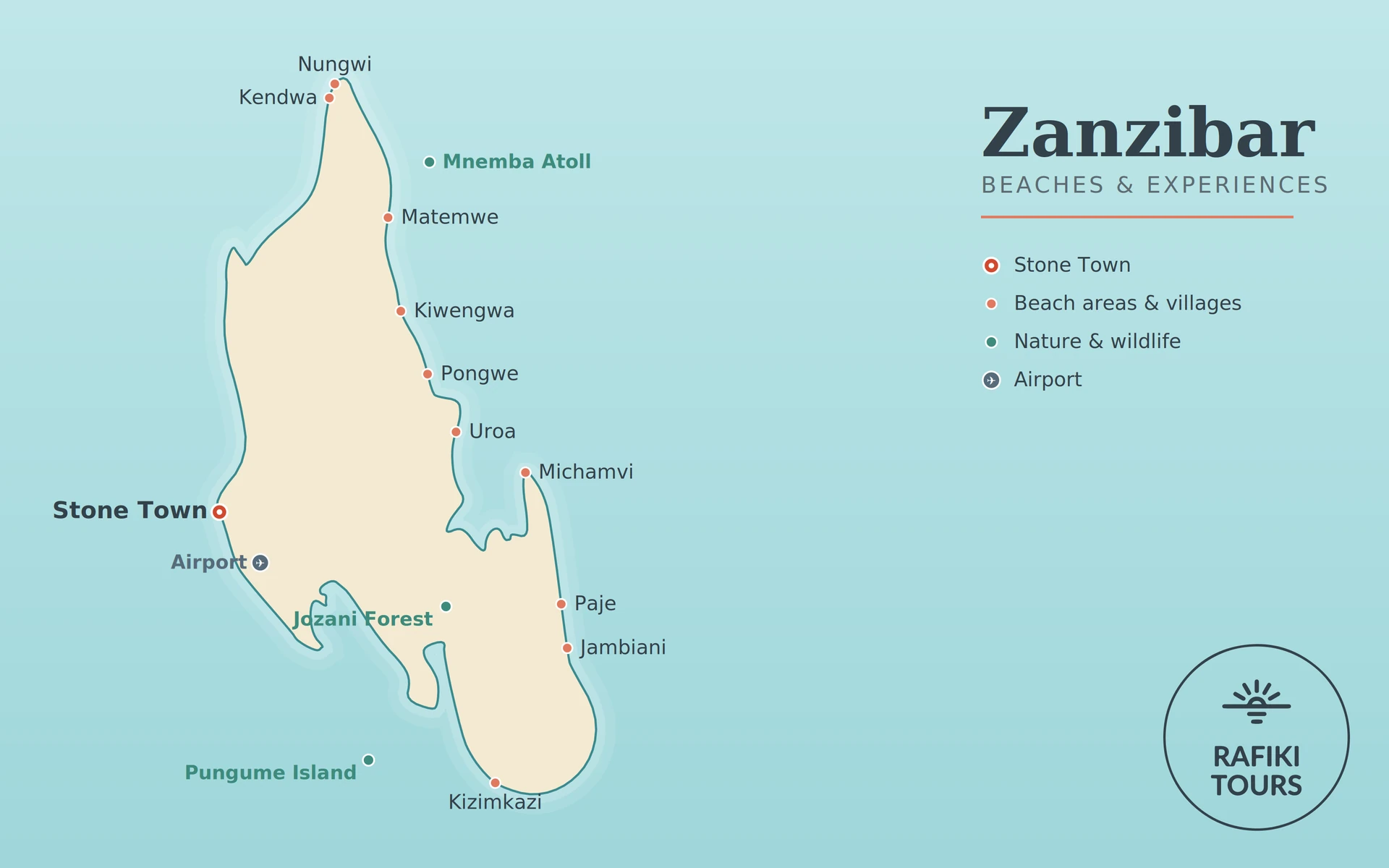
Zanzibar is about 90 kilometers from top to bottom, and which side you pick shapes the whole holiday. With kids, the tide and the swimming matter as much as the hotel photos.
The north (Nungwi and Kendwa) is the most practical base for families. The beaches are wide, there are no real tide issues, so children can swim at any hour of the day rather than waiting for the water to come back in. There are also plenty of restaurants close by, which is a relief if you have a fussy eater. Lively, but with everything you need on your doorstep. Kendwa is slightly calmer than Nungwi.
The northeast (Matemwe, Pwani Mchangani) is quieter and has the best access to Mnemba Atoll for snorkeling. Beautiful, relaxed, and close enough to drive north for a busier day or dinner if you want one.
The east coast (Pongwe, Kiwengwa, Uroa) is calm and low-key, with many family resorts that have pools and kids' clubs. The reef sits offshore here, which creates shallow, protected lagoons, wonderful for little ones to paddle in at the right tide. The flip side is that at low tide the sea can retreat a long way and swimming is limited on some stretches, so a hotel pool is worth having. Check your hotel's tide situation before booking.
The southeast (Paje, Jambiani) has a younger, more active energy. Paje is Zanzibar's kitesurfing capital, great if you have teenagers who want to learn, and has plenty of casual restaurants. Tides are stronger here, so it suits older, confident kids more than toddlers.
Stone Town is worth a night or two at the start or end of the trip rather than a long stay with young children. It is wonderful in small doses: narrow alleys to explore, rooftop dinners, the buzz of the night market. Then move on to the beach.
A general tip for families: wherever you base yourselves on the east or southeast, a hotel with a pool takes the pressure off when the tide is out. Want to go deeper on individual beaches? Our guide to the best beaches in Zanzibar walks through each one in more detail.
The Experiences Worth Booking
Beyond "beach, repeat," here is what we would actually book if it were our own family. The thread running through all of these: we run them privately, just for your family, which with kids is the difference between a relaxed day and a stressful one.
Snorkeling at Mnemba Atoll
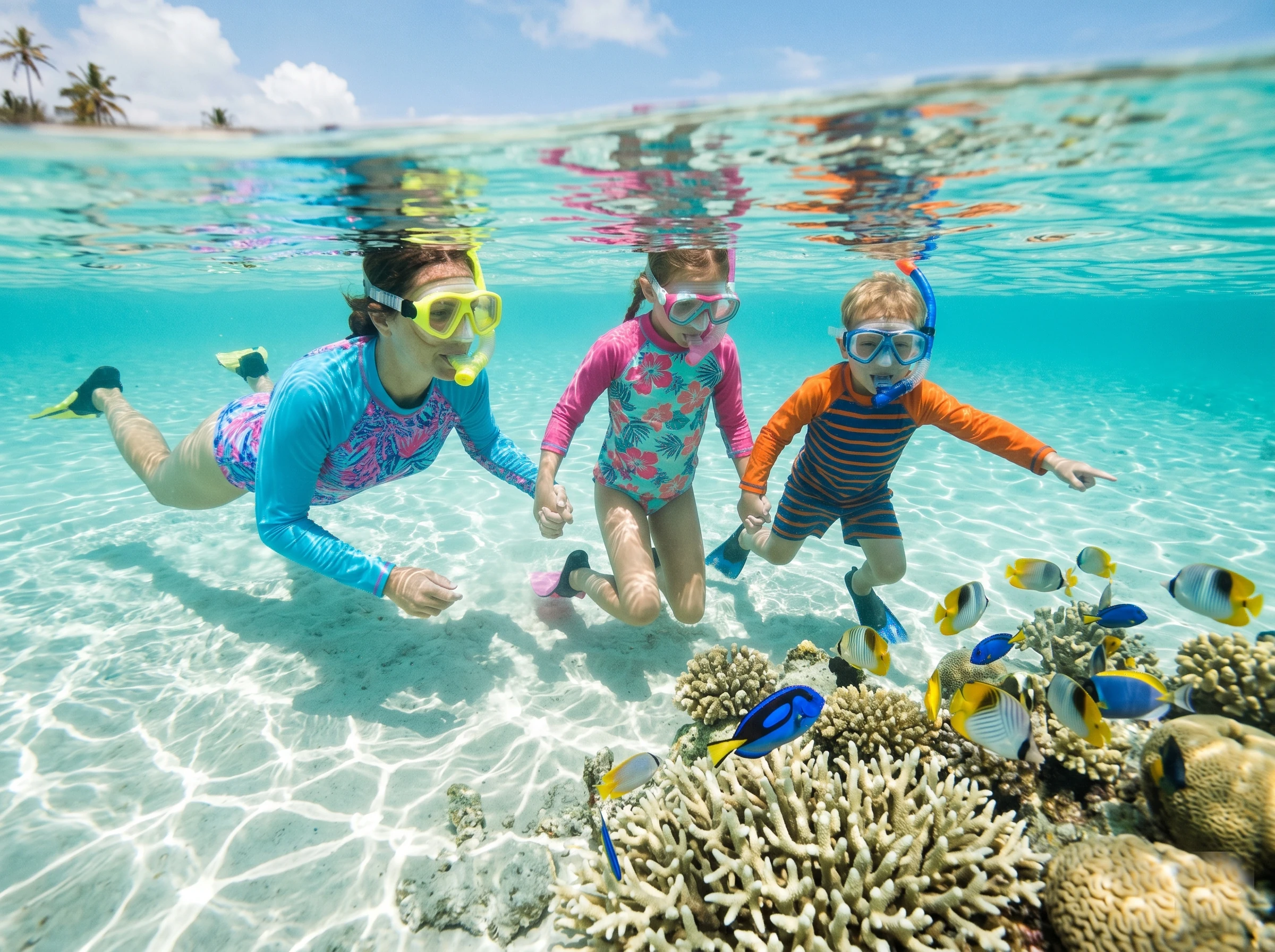
Mnemba is a small coral atoll off the northeast coast with the best snorkeling on the island. Tropical fish in numbers you rarely see, dolphins if you are lucky, and reef shallow enough that children who can swim do not need to be strong swimmers to enjoy it.
We organize private boats to Mnemba so you skip the crowds, leave early when the water is clearest and calmest, and snorkel with a guide who can keep an eye on the kids. Bring reef-safe sunscreen. The regular kind harms the coral and is increasingly hard to buy on the island. Rash guards or UV swim shirts are ideal for little ones who will be in and out of the water all morning.
A Sandbank Lunch on Pungume Island
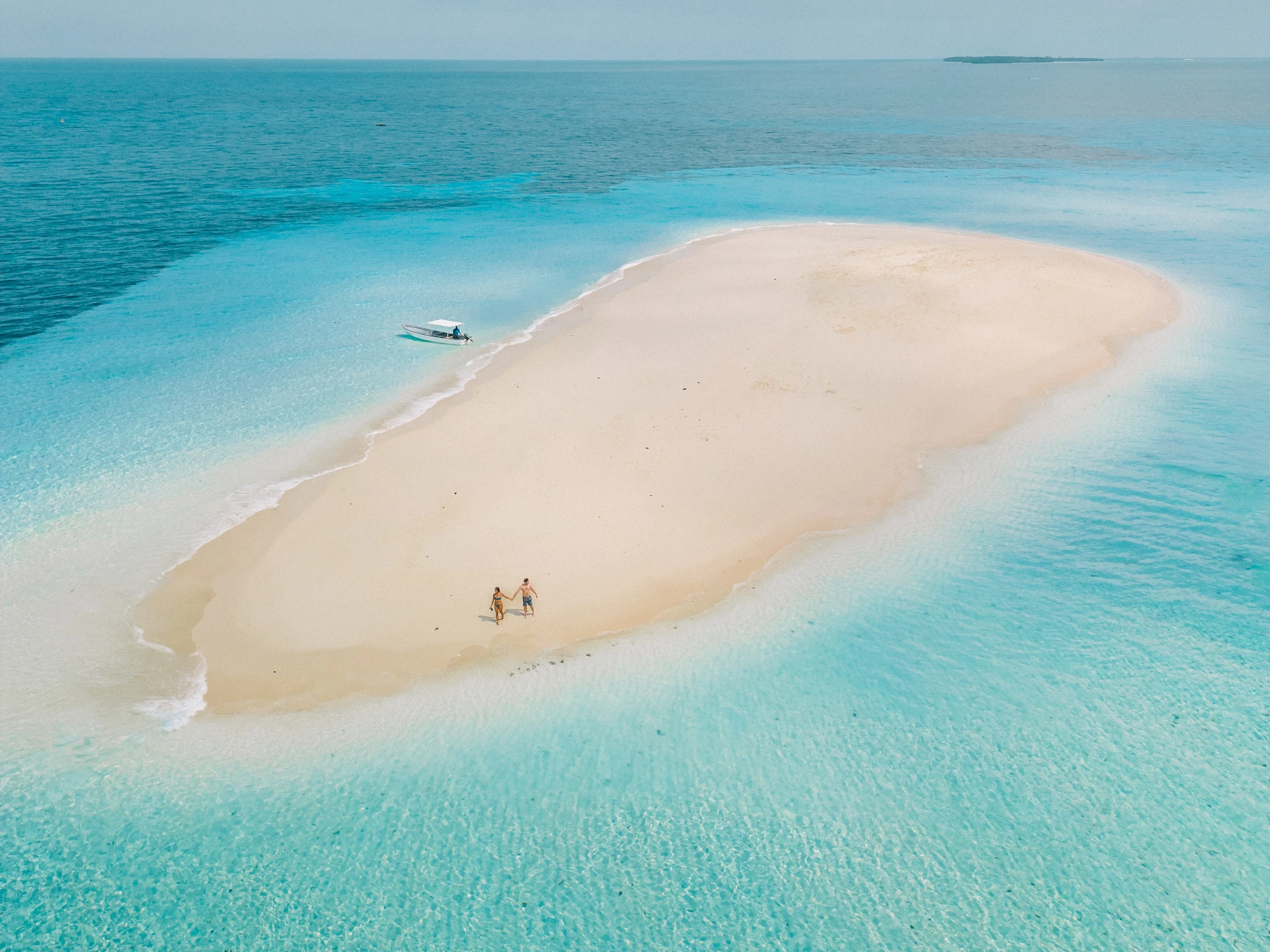
A few hundred meters offshore, at low tide, sandbanks rise out of the ocean, small white-sand islands with nothing on them but you and 360 degrees of turquoise. Kids treat them as their own private island, and the shallow water around them is calm and safe for paddling. Our Pungume Island Tour takes you out for the day with a fresh lunch served right there on the sand.
The magic, and the part children love most, is that the sandbank disappears again as the tide comes in, so you really do have it for only a few hours. If there is anything you want set up for the family, just message us when you book.
A Spice Farm Visit
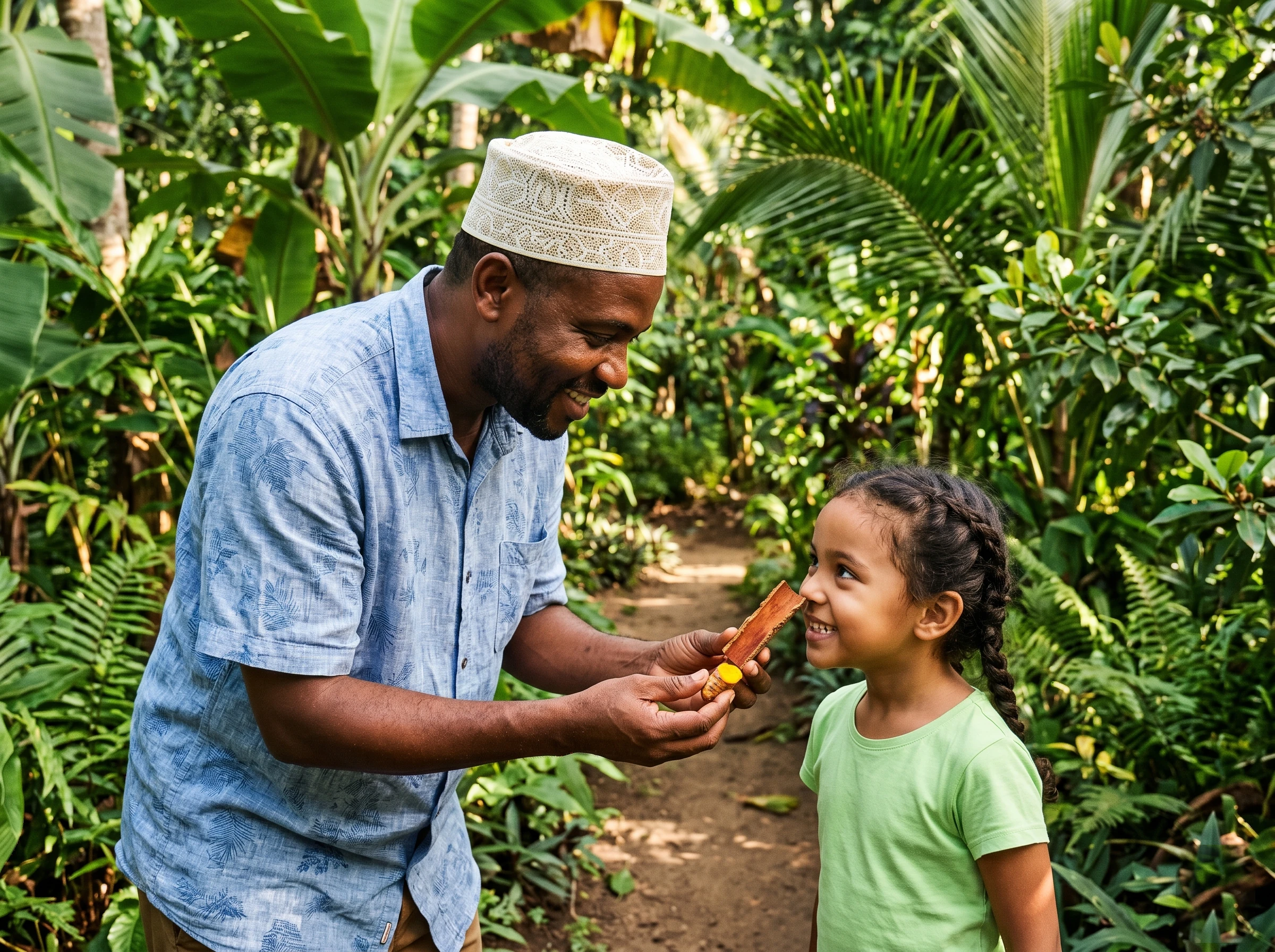
This is the tour that sounds like it is for the grown-ups and turns out to be a hit with kids. A working spice farm visit is hands-on and sensory: cinnamon bark scraped off a living tree, vanilla pods drying in the sun, turmeric that stains your fingers yellow, fruit cut fresh off the branch to taste. Children get to smell, touch, and taste their way around, and the guides are good at turning it into a treasure hunt rather than a lecture.
If you want the history behind it all, our post on why Zanzibar is known as the Spice Island gets into the trade routes that built the place.
Stone Town and the Night Market
Spend an afternoon wandering Stone Town with no real plan. The alleys are narrow, the carved wooden doors are extraordinary, and getting a little lost is part of the fun. Stone Town is a UNESCO World Heritage Site, so there is plenty of history packed in if your kids are old enough to be curious. We can guide you through it or point you toward the best spots and let you explore at your own pace.
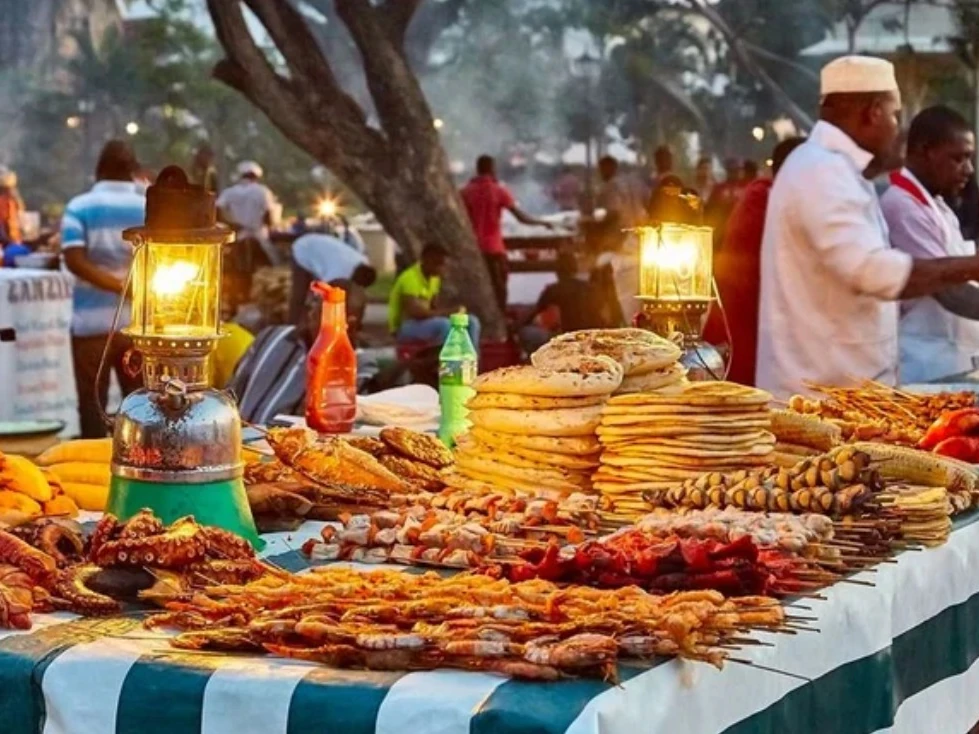
The real winner with children comes at dusk. Head to Forodhani Gardens on the seafront, where local vendors fire up grills as the sun goes down and it turns into the best street-food market on the island. Seafood skewers, Zanzibari pizza (try it, it is not pizza in the Italian sense, but kids love it), and sugarcane juice pressed in front of you. For more on what to eat across the island, our Tanzania food guide is a useful primer.
Jozani Forest and the Red Colobus Monkeys
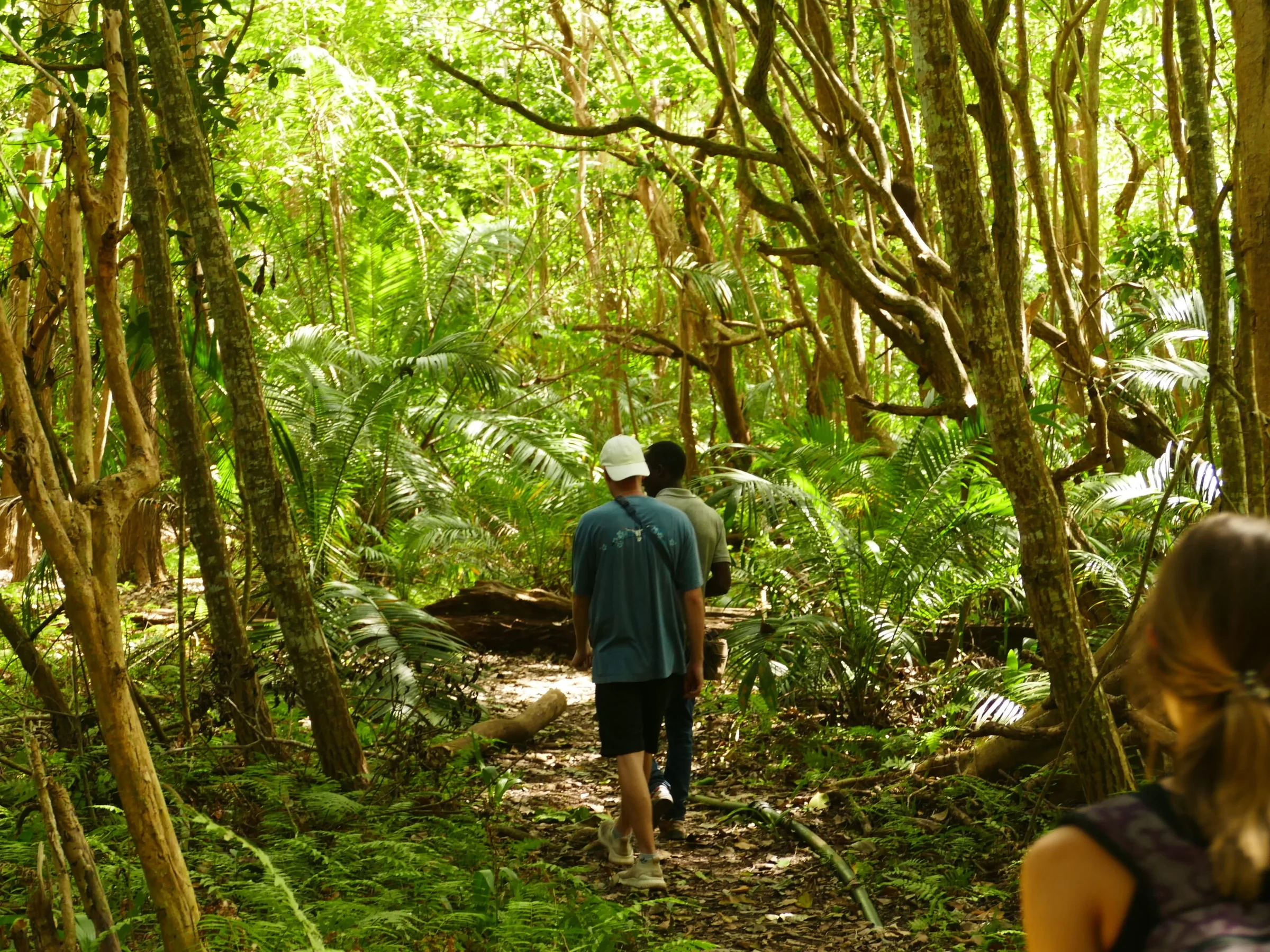
If you want a half-day excursion with low effort and a big payoff for kids, Jozani is it. It is the only place in the world where you can see the rare red colobus monkey, and a short, easy walk through the forest with a guide puts you just a few meters from troops of them. Animals you can almost reach out and touch. There is no faster way to win over a child on holiday. Quick, easy, and unique to Zanzibar.
A Sunset Dhow Cruise
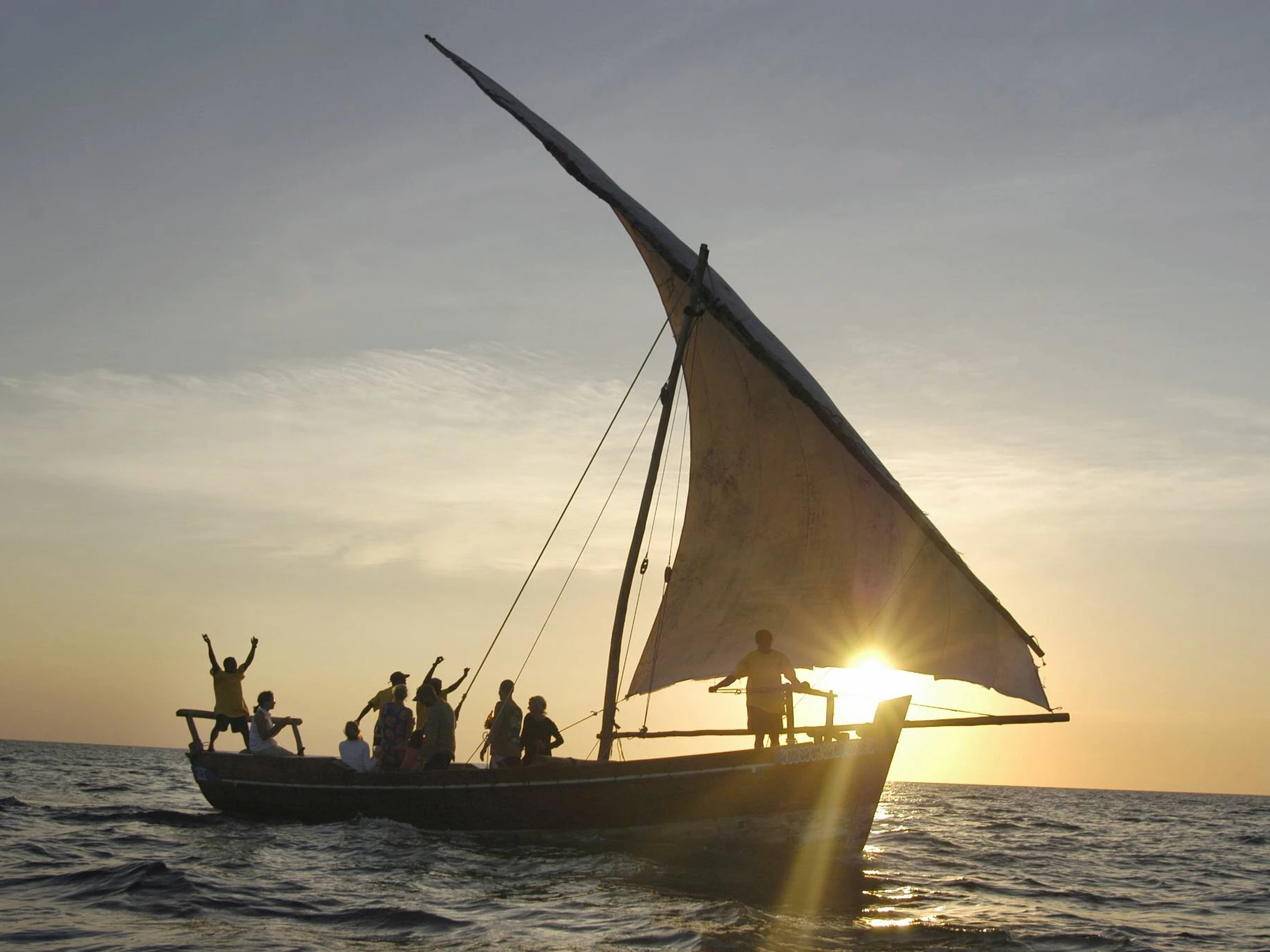
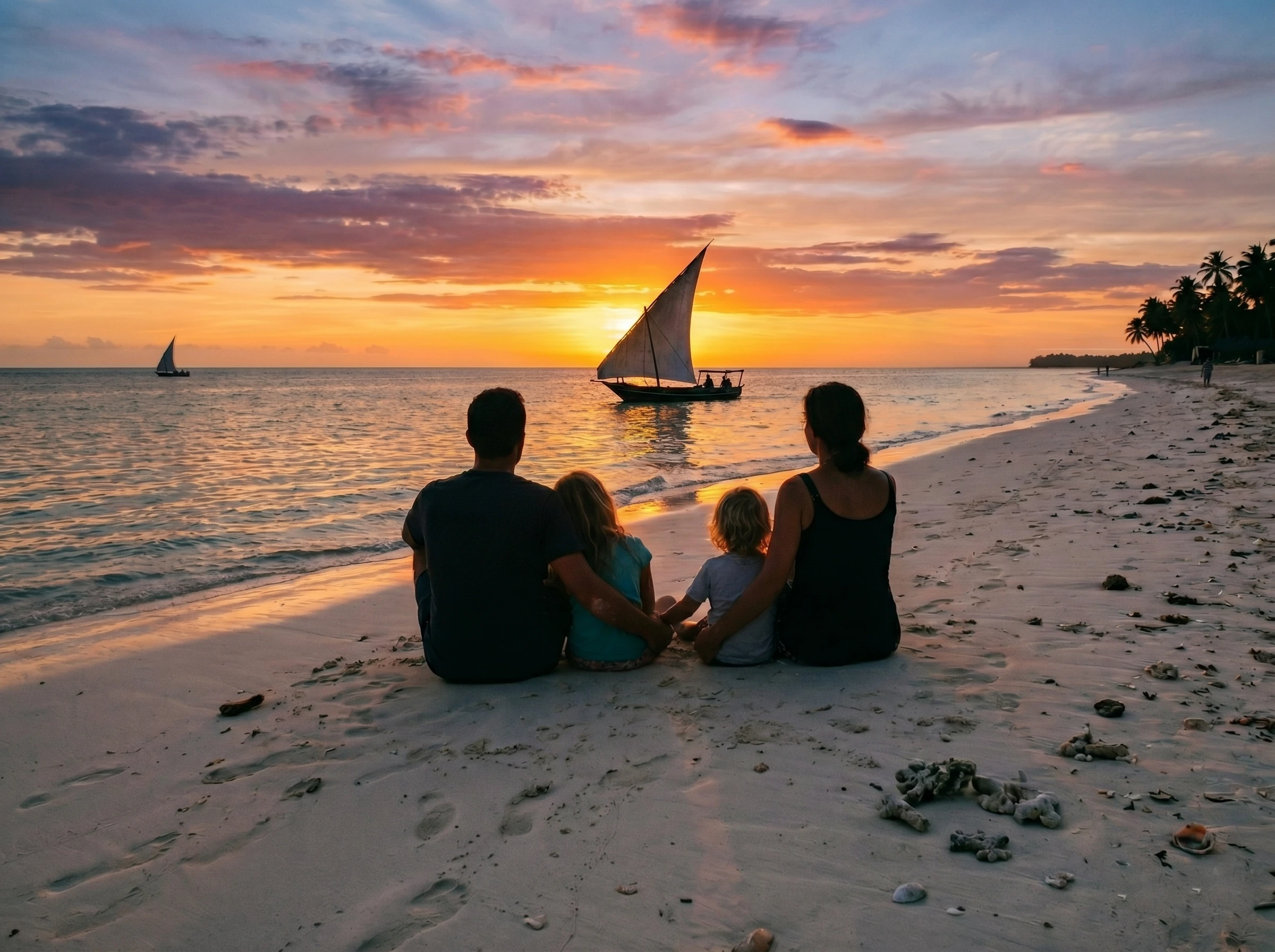
A dhow is the traditional wooden sailing boat that has worked these waters for over a thousand years, and to a child, it is essentially a pirate ship. We run private sunset dhow cruises where it is just your family, a crew who know the wind, and a basket of snacks and drinks. You sail out as the day softens and watch the sun drop into the Indian Ocean. Bring a light layer for the kids for when the breeze picks up after dark.
A Safari Add-On

Most families do not realize this is on the table. From Zanzibar you can fly to the mainland and combine your beach week with a real African safari, and for kids, seeing elephants and giraffes in the wild is the memory that outlasts everything else.
Our Mikumi National Park day trip is the easiest taste of safari for a family: an early flight over, a full day of game drives among elephants, giraffes, zebras, and lions, and back to Zanzibar by evening. It is a long day, so it suits older children better than toddlers. Be honest with yourself about your kids' stamina. For families with more time, we can build longer mainland combinations. Our full breakdown is in How to Go on a Safari From Zanzibar.
Bonus: The Nungwi Turtle Sanctuary
Up in Nungwi there is a natural aquarium that cares for rescued sea turtles. Kids can watch them up close and, at the right time, feed them seagrass. It is a simple, low-effort hour that almost every child remembers, and an easy add-on if you are based in the north.
Practical Tips for Families
A few things worth knowing before you arrive with kids. For the full pre-departure checklist, see our what you need to know before visiting Zanzibar guide.
Visas and passports. Every traveler needs their own, children included. Each child needs their own passport and their own Tanzania tourist visa. You can get visas on arrival at the airport, but applying online in advance via the official Tanzania eVisa portal is smoother and saves you queueing with tired kids after a long flight.
Packing for kids. Reef-safe sunscreen (genuinely important, and hard to buy here), UV rash guards or swim shirts, sun hats, and reef shoes to protect little feet from coral and sea urchins. Pack any specific children's medications you might need, as the local pharmacy selection is limited. Bring a few familiar snacks for fussy eaters and a child-appropriate insect repellent.
Health. Talk to your pediatrician or a travel doctor well before you go about child-appropriate malaria prophylaxis. The CDC travel health page for Tanzania has the current recommendations. Stick to bottled water for the whole family. Do not drink the tap water. There are clinics on the island for minor issues, but serious cases are evacuated to the mainland or Nairobi, so comprehensive travel insurance that includes medical evacuation is essential when traveling with children.
Food. The cuisine is mild and family-friendly: lots of rice, grilled fish, fresh fruit, and chips are widely available, so even picky eaters will find something. Hotels are well used to catering to children.
Getting around. Roads are bumpy and distances take longer than the map suggests, which can be hard on small kids. Child car seats are not standard in Zanzibar, but we can arrange one on request. Just tell us when you book. Private transfers take a lot of the stress out of moving around with a family.
Money. Tanzanian shillings are the currency, but US dollars and euros are widely accepted at hotels and tour operators. Bring cards (Visa is more accepted than Mastercard) and some clean post-2009 dollar or euro notes for tips and incidentals.
Connectivity. Most hotels have Wi-Fi but it can be patchy. With kids on holiday, that is arguably a feature.
How Rafiki Tours Can Help
We built Rafiki Tours for families and couples who want more than the standard tour-bus package, and for families the single biggest advantage is that every experience we run is private. The boat, the car, the snorkeling trip, the sandbank: just for your family.
That privacy changes everything when you are traveling with children. You set the pace. You can leave early to beat the heat, build in a nap, take a slow morning, or turn back if a toddler has had enough, none of which is possible when you are stuck on a group bus running to someone else's schedule. We are flexible on ages and group sizes, and we can arrange the extras families need, from car seats to specific dietary requests.
We work in English, German, French, Italian, and Spanish, so you can plan in your own language. Booking is instant: you can lock in your experiences with a deposit through our website, which most operators in Zanzibar still do not offer. And because we live here, if something needs to change (weather, tides, a sick child, a last-minute idea), we adapt the plan in real time.
If you want help building a family itinerary, just message us. We will suggest what we would actually do with our own kids, and shape the rest around your family.
One Last Thing
The best family holidays we have seen all have one thing in common: the parents did not try to do everything. They picked three or four experiences the whole family would love, spread them across the week, and left long, lazy stretches of pool and beach in between. With kids especially, an over-packed itinerary is the fastest route to meltdowns, everyone's.
Your children will not remember a checklist of attractions. They will remember the morning they had a sandbank to themselves, the monkeys in the forest, the chips at the night market, and the afternoons spent doing nothing much at all in the warm, shallow water.
Zanzibar gives you the raw material. The rest is just time together.
Karibu sana. You and your family are very welcome here.